
Where Our Monk Fruit Comes From (And Why We Pair It With Erythritol)
If you've spent any time in the sugar-free corners of the internet, you've probably seen the claim: "Lakanto is only 1% monk fruit — it's basically just erythritol, and erythritol isn't even safe."
It's a headline built to alarm you. It's also missing almost everything that actually matters. So let's slow down, look at where our monk fruit really comes from, why erythritol is in the bag at all, and what the science actually says — so you can make up your own mind with the full picture.
From the mountains of Guilin to your pantry
Monk fruit — known in China as Luo Han Guo — isn't a lab invention. It's a small, round fruit in the gourd family that's been grown in the remote highlands of Guilin, China for centuries, first cultivated by Buddhist monks who were said to use it for its remarkable sweetness and believed it held the secret to a long life.
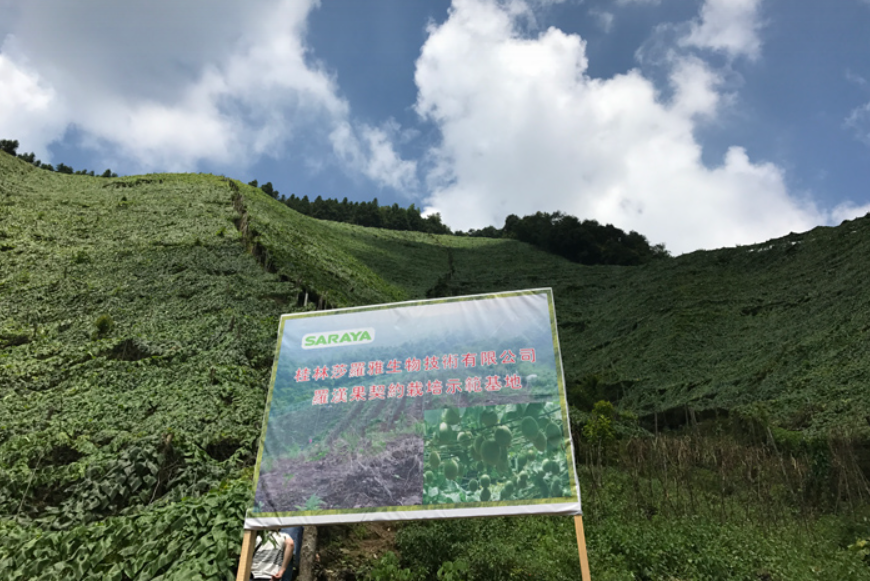
That's still where our monk fruit comes from today. We grow it on pristine farms high in the mountains, well away from city pollution, at the specific elevation, humidity and day-to-night temperature swing the plant needs to thrive. Each fruit is still pollinated, grown and hand-harvested using traditional methods — bottle traps and netting instead of harsh pesticides, family farms instead of industrial monoculture, and a five-year field-cycling system where trees are planted alongside the vines and left to grow into forest once the fruit fields move on. It's slow, deliberate farming, and every batch of fruit is checked three times for quality — in the field, on arrival at the processing plant, and again before extraction, with samples lab-tested for hundreds of chemicals.
Once harvested, the whole fresh fruit is washed, crushed and gently steeped in hot water — no roasting, no shortcuts — to draw out the mogrosides, the compounds responsible for monk fruit's intense sweetness. That extract is filtered and concentrated in a zero-emissions processing plant, using the extraction method pioneered decades ago specifically for monk fruit. The result is one of the most naturally concentrated sweeteners on earth: roughly 150 to 300 times sweeter than sugar, depending on concentration, with zero calories and zero effect on blood sugar.
The company behind the science: Saraya
Lakanto isn't a marketing label slapped onto a generic ingredient — it's the retail face of Saraya Co., Ltd., a family-owned company based in Osaka, Japan, that has been developing and researching monk fruit sweeteners since the 1990s. Saraya's R&D team is the one growing relationships with the farming families in Guilin, building and operating the extraction facility, and running the ongoing safety and quality testing behind every batch.
It's also worth knowing that monk fruit extract wasn't always legal to sell as a sweetener in Australia and New Zealand. Until 2018, it could only be sold here as a flavouring or as whole dried fruit. It was Saraya — not a government body, not a competitor, not an industry group — that lodged the formal application with Food Standards Australia New Zealand (FSANZ) to have monk fruit extract approved as an intense sweetener. That process took roughly three years and a significant investment of time and money, working through safety assessments before FSANZ granted approval in late 2018. Lakanto was first to market with it in Australia in 2019.
That approval didn't just open the door for Lakanto — it opened the door for every brand now selling monk fruit sweetener in this country. Any product with monk fruit extract on an Australian or New Zealand shelf today exists within a regulatory pathway Saraya paid for and fought to establish. It's a detail that rarely makes it into the "1% monk fruit" posts, but it's a fairly important piece of context when those same posts are casting doubt on the company that did the groundwork.
Saraya also owns and operates its supply chain end to end, rather than licensing the name out. The same company that works with the growers and runs the extraction facility supplies its own regional businesses around the world, including Saraya Australia Pty Ltd, which packs Lakanto locally in Sydney and handles the marketing, retail and wholesale relationships directly — rather than importing through a third-party distributor. That means one company is accountable for the product from the mountain slopes of Guilin to the shelf at your local supermarket, with no unnamed intermediaries in between.
So why isn't the bag just monk fruit?
This is where the "1%" claim actually comes from — and it's true, just not in the way it's being used to scare people.
Because monk fruit extract is so intensely sweet, it can't be used on its own as a cup-for-cup sugar replacement. If you tried to bake with pure monk fruit extract at the same volume as sugar, your recipe would be inedible — you'd need a tiny fraction of a teaspoon to sweeten an entire cake. None of your usual measurements, ratios or textures would work. That's genuinely impractical for anyone wanting to bake, cook or stir a spoonful into their coffee the way they always have.
That's the actual problem erythritol solves. Erythritol is only about 60–80% as sweet as sugar, with a similar volume, texture and mouthfeel. When it's carefully combined with our monk fruit extract, the blend matches sugar's sweetness, bulk and browning properties closely enough that you can swap it in 1:1 — same cup, same spoon, same recipe. Monk fruit still does a large share of the actual sweetening (roughly 20–40%, despite its tiny weight in the mix), while erythritol provides the bulk and texture that make monk fruit usable in the real world. Neither ingredient can do this job alone. That's not filler — that's formulation.
But is erythritol actually safe?
This is the more important question buried under the "1%" headlines, and it deserves a straight answer.
Erythritol isn't synthetic. It's a sugar alcohol that occurs naturally in foods you already eat — grapes, pears, melons, mushrooms, and fermented foods like wine and cheese. Commercially, it's produced by fermenting glucose with yeast, similar in principle to how vinegar or yoghurt is made; the yeast is then fully removed and the erythritol is purified out.
It's also one of the most extensively studied sweeteners available. It has been in commercial use for around 40 years and has safety approval from the FDA, the European Food Safety Authority, and the World Health Organization. Because it isn't fermented by gut bacteria the way sugar and some other sweeteners are, most people tolerate it well in normal use, and it's also recognised by dental health bodies as tooth-friendly.
You may have seen a 2023 study that linked erythritol to cardiovascular risk. It's worth knowing that study looked at blood erythritol levels in people who already had heart disease risk factors — it didn't test people consuming erythritol as a sweetener, and it couldn't establish that erythritol caused the outcomes it measured. It was widely queried by nutrition scientists for those reasons. We take ingredient safety seriously and keep a close eye on new research as it's published — but on the full body of evidence, erythritol remains one of the most well-established and thoroughly vetted sweeteners on the market.
The bigger picture: why any of this matters
It's easy to get lost arguing about percentages and forget the actual problem people are trying to solve. Most of us are eating far more added sugar than we realise, and the consequences show up quietly, then all at once — energy crashes an hour after eating, sugar cravings that seem to get louder the more you feed them, weight that creeps on despite "eating fine," rising blood sugar and insulin resistance, and long-term risks like type 2 diabetes, fatty liver and heart disease. Sugar is also just genuinely hard to quit, partly because it's engineered into everything and partly because cutting it usually means giving up the foods and routines you actually love.
That's the gap Lakanto is built to close. Because our monk fruit and erythritol blend is designed to behave like sugar — same sweetness, same volume, same 1:1 measurement — you don't have to relearn how to bake, recalculate a family recipe, or choke down something that tastes "diet." You can keep your banana bread, your flat white, your Sunday pavlova, and just change what's sweetening it. That's the whole idea: making the switch away from sugar as close to effortless as possible, so it's actually sustainable rather than another health kick that fizzles out by February.
Where your sweetener comes from and what's really in it should never be a mystery. Now you know both — grown by hand in the mountains of Guilin, paired with a well-studied natural sweetener for one simple reason: so a spoonful of Lakanto works exactly like a spoonful of sugar, without the sugar.